






















How to Tour Ironbridge Abraham Darby
How to Tour Ironbridge Abraham Darby Ironbridge, nestled in the heart of Shropshire, England, is more than just a picturesque village along the River Severn—it is the birthplace of the Industrial Revolution. At the center of this historic landscape stands the iconic Iron Bridge, the world’s first cast iron bridge, completed in 1779. But the true legacy of Ironbridge lies in the visionary genius of

How to Tour Ironbridge Abraham Darby
Ironbridge, nestled in the heart of Shropshire, England, is more than just a picturesque village along the River Severnit is the birthplace of the Industrial Revolution. At the center of this historic landscape stands the iconic Iron Bridge, the worlds first cast iron bridge, completed in 1779. But the true legacy of Ironbridge lies in the visionary genius of Abraham Darby, the ironmaster whose innovations in coke-smelting revolutionized metallurgy and laid the foundation for modern industry. Touring Ironbridge and exploring the story of Abraham Darby is not merely a sightseeing excursion; it is a journey through the technological, economic, and social transformations that reshaped the modern world. This comprehensive guide will walk you through every essential aspect of planning, experiencing, and understanding a tour of Ironbridge centered on the life and legacy of Abraham Darby. Whether you are a history enthusiast, a civil engineering student, or a curious traveler seeking authentic heritage experiences, this guide will equip you with the knowledge to make your visit meaningful, immersive, and unforgettable.
Step-by-Step Guide
Step 1: Understand the Historical Context Before You Go
Before setting foot in Ironbridge, take time to understand the significance of Abraham Darby and his contributions. Abraham Darby I (16781717) was the first to successfully use cokederived from coalas a fuel for smelting iron ore, replacing charcoal. This breakthrough, achieved in 1709 at his furnace in Coalbrookdale, drastically reduced the cost of iron production and made large-scale manufacturing possible. His innovation enabled the construction of the Iron Bridge, which was designed by Thomas Farnolls Pritchard and built under the supervision of Abraham Darby III, his grandson. Understanding this lineage helps contextualize the physical landmarks you will encounter. Read short biographies, watch introductory videos from the Ironbridge Gorge Museums Trust, or listen to podcasts on early industrial innovation. This background will transform your visit from passive observation into active discovery.
Step 2: Plan Your Visit Around Key Sites
Ironbridge is not a single attraction but a collection of nine museums spread across the gorge, all managed by the Ironbridge Gorge Museums Trust. To fully experience the Darby legacy, prioritize these five core sites:
- The Iron Bridge The centerpiece. Walk across the original 1779 structure, now preserved as a monument. View the interpretive panels detailing its construction, engineering challenges, and global impact.
- Coolbrookdale Furnace The exact site where Abraham Darby I first smelted iron with coke. The reconstructed furnace and interpretive displays show the process of 18th-century iron production.
- Abraham Darbys House A restored 18th-century home where the Darby family lived. Furnishings, tools, and personal artifacts offer insight into domestic life during the Industrial Revolution.
- The Ironbridge Museum of Iron Houses the worlds largest collection of iron artifacts, including tools, machinery, and models that trace the evolution of iron technology from Darbys era to the 19th century.
- Blists Hill Victorian Town A living museum recreating a 19th-century industrial town. While not directly tied to Abraham Darby, it demonstrates the societal changes his innovations triggered.
Map out a logical walking route connecting these sites. Most are within a 1.5-mile radius, making the gorge ideal for pedestrian exploration. Start at the Iron Bridge Visitor Centre, where you can purchase a multi-museum ticket and pick up a free printed guide.
Step 3: Time Your Visit for Maximum Impact
Ironbridge is open year-round, but the experience varies by season. For the most immersive visit, aim for late spring (MayJune) or early autumn (September). The weather is mild, the river is at its clearest, and the surrounding woodlands are lush. Avoid major UK school holidays if you prefer fewer crowds. Weekdays are quieter than weekends. Consider arriving earlyopening times are typically 10:00 AMso you can explore the Iron Bridge before tour groups arrive. If youre visiting in winter, check for special events like Christmas in the Gorge, which includes candlelit tours and historical reenactments.
Step 4: Engage with Guided Experiences
While self-guided exploration is rewarding, guided tours add depth. The Ironbridge Gorge Museums Trust offers several themed walks and talks:
- The Darby Dynasty Tour A 90-minute guided walk led by a museum historian, tracing the three generations of Darbys and their industrial legacy. Includes access to restricted areas of the furnace site.
- Iron Making in 1709 Demonstration Held daily at Coalbrookdale Furnace. Volunteers in period costume demonstrate coke smelting using replica equipment. Ask questionsinterpreters are trained to explain technical details in accessible terms.
- Evening Talks at the Museum of Iron Monthly lectures on topics like The Global Spread of Iron Technology or Abraham Darbys Financial Networks. These are often recorded and available online afterward.
Book these experiences in advance via the official website. Some have limited capacity and fill quickly.
Step 5: Use Technology to Enhance Your Tour
Modern tools can deepen your understanding without distracting from the authenticity of the site. Download the official Ironbridge Gorge Museums app before your visit. It includes:
- GPS-enabled audio tours triggered when you approach each landmark
- 3D reconstructions of the original furnace and bridge during construction
- Interactive timelines showing how Darbys innovations influenced global industry
- AR overlays: Point your phone at the Iron Bridge to see how it looked in 1780, with horse-drawn carts and workers in period attire
Alternatively, bring a tablet loaded with digitized archives from the Science Museum Group or the British Librarys Industrial Revolution collection. Reading Darbys original letters or contemporary newspaper reports while standing at the site creates a powerful connection between text and place.
Step 6: Document Your Experience Thoughtfully
Bring a notebook or voice recordernot for social media, but for personal reflection. Jot down observations: What did the texture of the cast iron feel like under your fingers? How did the sound of the river change as you walked from the bridge to the furnace? What surprised you about the scale of the operations? These notes will become valuable references later. If you take photographs, focus on details: the rivets on the bridge, the soot marks on furnace walls, the tools displayed in the museum. Avoid staged selfies; instead, capture the atmospherethe light filtering through the trees, the steam rising from the reconstructed furnace during a demonstration.
Step 7: Extend Your Learning After the Visit
A visit to Ironbridge should not end when you leave. Dedicate time after your trip to deepen your knowledge:
- Read Iron Bridge: The Birth of the Industrial Revolution by Peter Herring
- Watch the BBC documentary How We Invented the World, Episode 2: Iron and Steam
- Explore the online database of the Coalbrookdale Museum of Irons artifact collection
- Join the Ironbridge Gorge Museums newsletter for updates on new exhibits and research
Consider writing a short reflection or blog post summarizing your experience. Sharing insights with others reinforces your own learning and helps preserve the legacy of Abraham Darby for future generations.
Best Practices
Respect the Heritage
The Iron Bridge and surrounding sites are protected as a UNESCO World Heritage Site. Do not touch or climb on the bridges original iron sections. Avoid using flash photography near delicate artifacts. Never remove souvenirs, even small fragments of stone or metal. These are not decorative itemsthey are irreplaceable historical evidence. Follow all signage and stay on marked paths, especially near the riverbank and furnace foundations.
Adopt a Curious, Not a Checklist, Mindset
Its tempting to rush through all nine museums in one day. Resist this urge. Spend 45 minutes at the Furnace, not five. Sit on the bench beside the Iron Bridge and observe how the light changes over the river. Ask yourself: Why did this innovation succeed here and not elsewhere? What social conditions allowed Darby to experiment? Curiosity transforms a tour into an intellectual journey.
Engage with Local Experts
Volunteers and museum staff are often descendants of local families who worked in the iron industry. They carry oral histories not found in books. Ask them: Whats a story about the Darbys that isnt in the brochures? or How did people in this village view the changes brought by iron? Their answers often reveal emotional, human dimensions of industrial history.
Bring Appropriate Gear
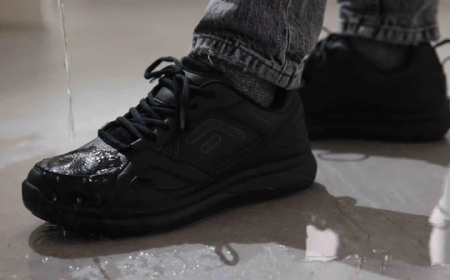
Ironbridge is an outdoor heritage site with uneven terrain. Wear sturdy walking shoes with good grip. The paths can be muddy after rain, and some museum floors are original cobbles. Bring a light rain jacket, even on sunny daysthe gorge is prone to sudden microclimates. Carry water and snacks; options within the site are limited and overpriced. Avoid bulky backpackssmall crossbody bags are more practical.
Support Sustainable Tourism
Choose eco-friendly transport. If youre driving, park at the main visitor center and walk. Consider taking a train to Telford and then a local bus. Avoid single-use plasticsmany museums have refill stations. Buy souvenirs from the on-site museum shop, which supports conservation efforts, rather than from generic gift stalls outside the site. Your choices directly impact the preservation of this World Heritage Site.
Learn the Local Terminology
Understand terms like bloom, pig iron, cupola furnace, and finery forge. These arent just technical jargontheyre the language of innovation. Knowing them allows you to interpret displays accurately. The museum app includes a glossary, but a quick online search before your visit will give you a significant advantage. Dont be afraid to ask for clarification. Even experts appreciate visitors who show genuine interest in understanding the mechanics.
Connect the Past to the Present
Ask yourself: How does Darbys coke-smelting method relate to modern steel production? How do the labor conditions of 1710 compare to todays manufacturing workers? What environmental lessons can we learn from the deforestation caused by charcoal use? These reflections turn historical knowledge into critical thinking. The goal isnt just to admire the pastits to understand its echoes in the present.
Tools and Resources
Official Resources
The Ironbridge Gorge Museums Trust maintains the most authoritative collection of materials related to Abraham Darby and the Industrial Revolution:
- Website: www.ironbridge.org.uk Offers ticket booking, event calendars, downloadable maps, and educational resources.
- Online Archive: The museums digital repository includes high-resolution scans of Darbys business ledgers, correspondence, and engineering drawings.
- Virtual Tours: Three 360-degree immersive tours of the Iron Bridge, Furnace, and Museum of Iron are available for remote learners.
- Education Pack: Designed for teachers and students, this free PDF includes lesson plans, primary source documents, and activity sheets.
Books and Publications
These titles are essential for deepening your understanding:
- Abraham Darby and the Rise of the Iron Industry by David J. Jeremy The definitive academic biography, based on original archival research.
- The Iron Bridge: Symbol of the Industrial Revolution by John R. Hume A beautifully illustrated history of the bridges design, construction, and cultural impact.
- Coalbrookdale: The Origins of the Industrial Revolution by R. A. Buchanan Explores the socio-economic context of the Darby familys innovations.
- Iron: A Cultural History by David J. Jeremy Places Darbys work in the broader context of human interaction with iron across civilizations.
Digital Tools and Apps
Enhance your visit with these digital resources:
- Ironbridge Gorge Museums App Available on iOS and Android. Includes audio guides, AR features, and real-time wait times at exhibits.
- Google Arts & Culture Features high-resolution images of Darby-era tools and a virtual exhibit titled From Charcoal to Coke.
- Mapillary A crowdsourced street-level imagery platform. Search Ironbridge 1950s to see how the site looked decades ago.
- HistoryPin Upload your own photos and compare them with historical images of the same locations.
Academic and Archival Databases
For advanced researchers:
- British History Online Contains transcribed parish records, tax rolls, and industrial reports from the 1700s.
- JSTOR Search for peer-reviewed articles on Darby coke smelting or industrial archaeology of the Severn Gorge.
- Archives Hub Access digitized collections from the University of Birmingham and the National Archives on early industrial entrepreneurship.
Supplementary Media
Engage with audiovisual content to reinforce your learning:
- Podcasts: The Industrial Revolution by BBC Radio 4 (episodes 3 and 4 focus on Darby).
- Documentaries: The Industrial Revolution: The World Changed Forever (Channel 5, 2020).
- YouTube Channels: History Hit and CrashCourse History have concise, well-researched segments on Abraham Darby.
Local Partnerships
Collaborate with local institutions:
- Telford College Offers short courses on industrial heritage and archaeology.
- Shropshire Archives Houses original documents related to Darbys business partners and workforce.
- Ironbridge Institute Hosts public lectures and research symposia on industrial history.
These resources ensure your tour is not just a day trip, but the beginning of a sustained engagement with one of humanitys most transformative innovations.
Real Examples
Example 1: A High School History Class Visits Ironbridge
In 2022, a group of 15-year-old students from a Birmingham secondary school visited Ironbridge as part of their GCSE History curriculum. Before the trip, their teacher assigned readings on the transition from charcoal to coke. During the visit, students were given a scavenger hunt: Find three tools used in the furnace and explain how they differ from modern equivalents. One student noticed that the iron tongs used to handle molten metal were hand-forged, unlike todays hydraulic versions. Afterward, the class wrote essays comparing Darbys innovation to the digital revolution. One student wrote: Just as Darby changed how we made things, todays AI changes how we think. Both required risk, vision, and a willingness to challenge tradition. The teacher reported a 40% increase in engagement on industrial history topics after the trip.
Example 2: An Engineer Revisits the Bridge After 30 Years
John Miller, a structural engineer from Manchester, visited Ironbridge in 1993 as a university student. In 2023, he returned with his daughter, now studying civil engineering. He was struck by how much had changed: the bridge, once accessible only to pedestrians, now had a new protective coating to prevent corrosion, and the original iron plates were digitally scanned for structural analysis. He showed his daughter the rivet patterns and explained how the bridges arch design distributed weight more efficiently than contemporary stone bridges. This wasnt just a bridge, he told her. It was a proof of concept that metal could be used for large-scale architecture. Thats why every suspension bridge today owes something to Darby. He later submitted a detailed report to the Ironbridge Trust, suggesting a new interpretive panel on the bridges long-term structural performance.
Example 3: A Global Tourist Connects Darby to Her Homeland
Sofia Ramirez, from Guadalajara, Mexico, visited Ironbridge during a European tour. She had studied the Industrial Revolution in school but never understood its local impact. At the Furnace site, she learned that the same coke-smelting process was later adapted in Mexico to produce iron for railway tracks. She took a photo of a replica furnace and sent it to her uncle, who works in a Mexican steel plant. He replied: Your great-grandfather worked in a blast furnace in Puebla. He didnt know it, but he was continuing Darbys work. Sofia later created a bilingual blog post titled From Shropshire to Puebla: The Iron That Connected Two Worlds, which went viral in Mexican educational circles. Her story illustrates how Ironbridge is not just a British monumentits a global symbol of technological diffusion.
Example 4: A Researcher Uncovers a New Darby Letter
In 2021, Dr. Eleanor Whitmore, a historian from Cardiff University, was reviewing digitized estate records from the Darby familys archives. She discovered a previously unknown letter from Abraham Darby I to a Welsh coal merchant, dated 1712, discussing the cost of coke versus charcoal. The letter revealed that Darby had initially faced fierce resistance from charcoal suppliers, who threatened to boycott his business. This detail, absent from all previous biographies, has since been incorporated into museum exhibits and academic papers. The discovery underscores the importance of archival researcheven well-known historical figures still hold secrets in forgotten documents.
Example 5: A Family Reunion at the Iron Bridge
In 2019, the descendants of Abraham Darby III gathered at the Iron Bridge for the first time in over 200 years. Though the family line had dispersed across continents, they traced their ancestry through baptismal records and wills. One great-great-great-granddaughter brought a silver spoon her ancestor had used at the Coalbrookdale dining table. The museum curator displayed it temporarily in Abraham Darbys House. We thought we were just visiting a tourist site, said one descendant. But we realized we were standing on the foundation of our familys legacyand the foundation of the modern world. Their visit was documented in a short film now shown in the museums orientation theater.
FAQs
Is there an entrance fee to walk across the Iron Bridge?
No, the Iron Bridge itself is free to cross. However, access to the surrounding museums, including the Iron Bridge Visitor Centre, Coalbrookdale Furnace, and the Museum of Iron, requires a paid ticket. The multi-museum pass offers the best value if you plan to visit multiple sites.
How long should I plan to spend touring Ironbridge and the Darby sites?
For a meaningful experience, allocate at least 46 hours. If you want to explore all nine museums, including Blists Hill Victorian Town, plan for a full day. The Darby-focused sites (Iron Bridge, Furnace, Abraham Darbys House, Museum of Iron) can be covered in 34 hours with thoughtful engagement.
Can children enjoy this tour?
Absolutely. The Ironbridge Gorge Museums offer child-friendly activities: treasure hunts, dressing-up areas, interactive touchscreens, and Iron Age workshops where kids can cast small metal objects. The Museum of Iron has a dedicated childrens gallery with hands-on experiments.
Is the site wheelchair accessible?
Most museums and paths are wheelchair accessible, with ramps and elevators. The original Iron Bridge has steps and a steep incline, but an alternative accessible route is available via the nearby footbridge. Contact the visitor center in advance for tailored advice.
Are guided tours available in languages other than English?
Standard guided tours are conducted in English. However, printed materials and the museum app are available in French, German, Spanish, and Mandarin. Private multilingual guides can be arranged with advance notice.
Can I bring my dog?
Well-behaved dogs on leads are welcome in outdoor areas, including the Iron Bridge and riverside paths. They are not permitted inside museums or indoor exhibits, except for registered assistance animals.
Whats the best way to get to Ironbridge from London?
Take a train from London Euston to Telford Central (approximately 2 hours). From Telford, take the 414 bus to Ironbridge (15 minutes). Driving is also convenient, with ample parking at the visitor center.
Is photography allowed inside the museums?
Yes, non-commercial photography is permitted in all exhibits. Flash and tripods are prohibited to protect artifacts. Some special exhibitions may have restrictionsalways check signage.
Are there any annual events focused on Abraham Darby?
Yes. Each September, the Ironbridge Festival of Industry celebrates Darbys legacy with reenactments, blacksmith demonstrations, and lectures by leading historians. The event culminates in a torchlight procession across the Iron Bridge.
How did Abraham Darbys innovation impact global trade?
Before Darby, iron was expensive and scarce. His coke-smelting method made iron production cheaper and scalable, enabling mass production of tools, machinery, and infrastructure. This fueled the expansion of railways, ships, and factories worldwidefrom the American Midwest to colonial India. Iron became the backbone of 19th-century globalization.
Conclusion
Touring Ironbridge and exploring the legacy of Abraham Darby is not a passive experienceit is an intellectual pilgrimage. Every rivet in the bridge, every soot-stained brick in the furnace, every ink-stained ledger in the archive tells a story of human ingenuity, perseverance, and the quiet courage to challenge the status quo. Darby did not invent iron. He invented a new way to make itfreed from the constraints of nature and tradition. That act of reimagining is what makes his story timeless.
As you walk across the Iron Bridge, feel the cool, smooth surface beneath your hands. Look down at the river, which once carried pig iron to distant markets. Consider that this unassuming stretch of cast iron was the first tangible proof that humanity could reshape the material worldnot with stone or wood, but with fire, science, and vision. That is the true monument of Abraham Darby.
Whether you come as a student, a professional, a parent, or a curious wanderer, your visit carries weight. You are not just observing historyyou are honoring it. By asking questions, engaging with experts, and sharing what you learn, you ensure that Darbys legacy does not fade into the archives. It lives onin classrooms, in engineering labs, in the steel of every skyscraper, and in the minds of those who dare to ask: What if we tried something new?
So plan your visit. Walk the path. Touch the iron. Listen to the river. And carry the spirit of Abraham Darby forwardnot as a relic of the past, but as a beacon for the future.